Which Professions Will AI Take, and in What Order?
Will mathematicians go first, or call centres? Are surgeons really safe? Can feature films be shot without cameras? My own ranking of the order in which AI will transform professions, and the reasoning behind it.
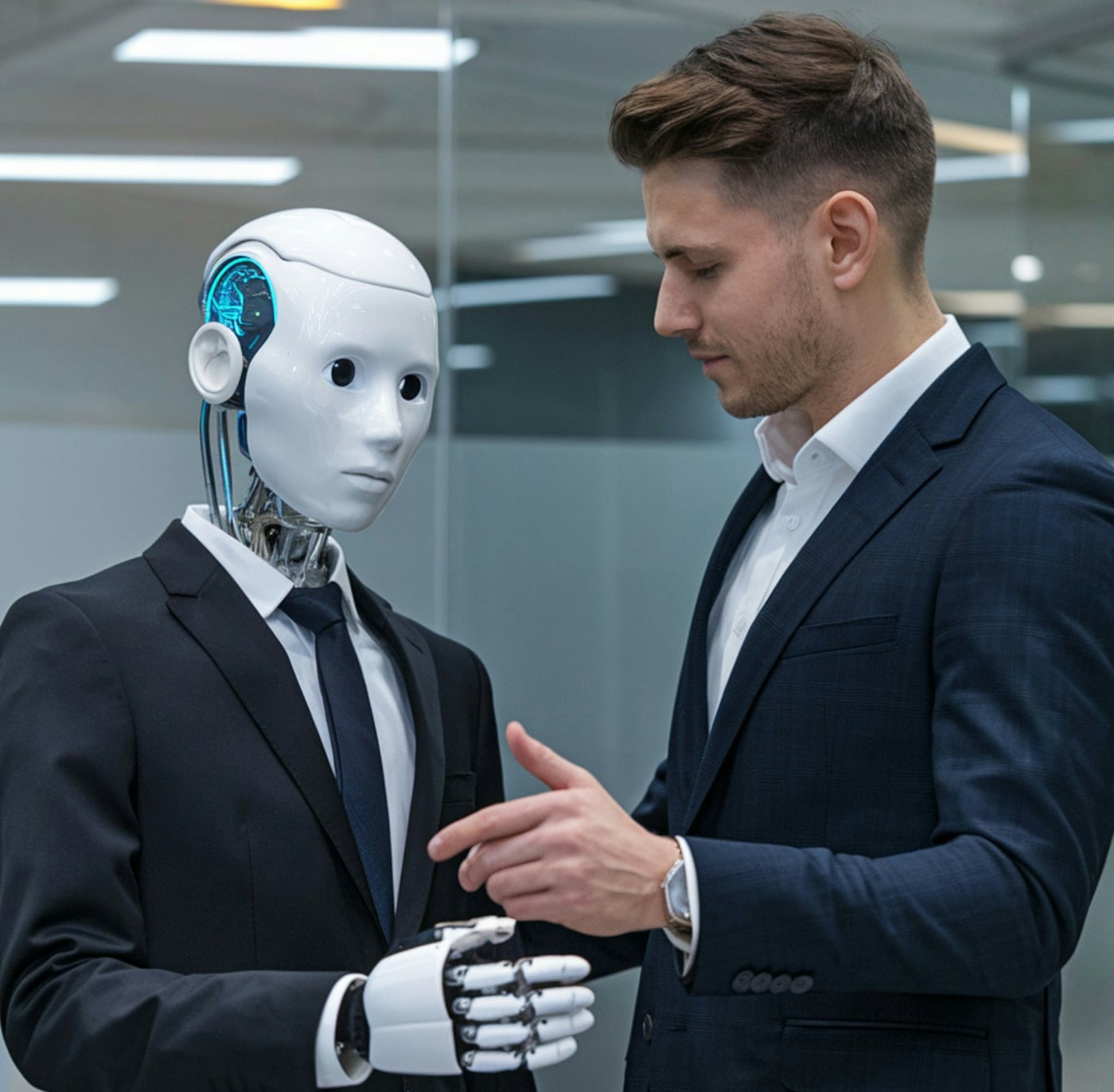
For years we were told the same story: first robots would take the repetitive jobs in factories, then truck driving would go, and "creative" and "intellectual" professions would be affected last. Mathematicians, physicists, writers and artists were supposed to be the safest.
In 2026 that picture has almost flipped. Today AI can solve maths problems that went unsolved for decades. But tidying a room or replacing a power socket is still very hard for robots.
In this post I share my own ranking of the order in which AI will transform professions. I didn't put it together at random. There are five simple questions behind it.
The logic of the ranking: What protects a profession from AI?
To understand how quickly a profession will be affected, I ask these five questions:
- Is the work entirely digital? Jobs that start and end on a screen come first. If you need to touch the physical world, you need a robot too, and that slows things down.
- Can the result be verified? Whether a proof is correct or a piece of code works can be tested definitively. AI improves very fast at tasks where correctness can be measured, because it can learn from its own mistakes.
- What does a mistake cost? A mistranslated email and a wrongly cut blood vessel are not the same thing. The more expensive the mistake, the longer human sign-off stays mandatory.
- Does it require manual dexterity and a body? Scientists call this Moravec's paradox: things that are hard for humans (chess, maths) are easy for machines, and things that are easy for humans (walking, grasping an object) are hard for machines.
- What do the law and trust say? In some jobs, even when the technology is ready, licensing, liability and public trust delay the transition for years.
When you consider these five questions together, a picture emerges that moves forward in waves.
First, a quick distinction: "Surpassing the skill" is not the same as "taking the job"
The question "Which profession will AI take first?" actually contains two separate questions:
- In which field does AI first catch up with the very best humans? The answer to this one is mathematics and the theoretical sciences.
- In which field do the most people lose their jobs first? The answer here is different: jobs like customer service, translation, copywriting and entry-level software development. Because millions of people work in these jobs, and AI already does them well enough.
The number of research mathematicians and theoretical physicists is tiny next to the millions of people working in call centres. That's why I split the ranking in two: the first masses to fall and the first fortress to fall.
Wave 1 (already under way): Routine jobs that start and end on a screen
Customer service, translation, copywriting and content writing, data entry, routine office work, entry-level software development.
This wave isn't a prediction; it's a fact backed by data. According to the August 2026 update of Stanford's "Canaries in the Coal Mine" study, which is based on payroll data, employment of 22-to-25-year-olds in the occupations most exposed to AI has fallen roughly 19% behind that of their peers in less affected occupations. Software development and customer support are in this group. On freelance platforms, too, demand for writing and translation work dropped noticeably after ChatGPT came out.
I have to be honest here: how much of this decline comes directly from AI, and how much from interest rate hikes and a general hiring slowdown, is still debated among economists. But the direction is fairly clear. The ones hit hardest are people just starting out. Senior employees use AI as a tool, while the work juniors would have done is being done by AI directly.
Wave 2 (the first fortress to fall): Mathematics and the theoretical sciences
Mathematics is one of the first fields where AI is catching up with humanity's best. The reason is the first two of my five questions: maths is entirely digital and its results are definitively verifiable. Proof assistants like Lean can check line by line whether a proof is correct. For AI, that means an unlimited training ground.
What has happened in the last few months:
- May 2026: An OpenAI model disproved Paul Erdős's roughly 80-year-old unit distance conjecture in the plane. The model found the construction showing that a long-accepted assumption was false. Nine mathematicians, including Fields Medallist Tim Gowers, checked and simplified the proof.
- May 2026: Google DeepMind's AlphaProof Nexus system announced that it had solved nine open Erdős problems and proved 44 more conjectures. The proofs were machine-verified with Lean.
- September 2026: Anthropic's Claude model pushed a scattering amplitude calculation, which describes how particles interact, from the 8 loops humans had reached in 2023 to 9 loops. The result was verified by physicist Lance Dixon.
- April 2026: At Emory University, a neural network extracted non-reciprocal forces between particles from dusty plasma experiment data, and overturned some long-held assumptions about these forces.
But we also need to see the limits of these examples. The physics calculation studied a simplified "toy" theory, not our actual universe. Commentators noted that the calculation contained no new technique; it applied existing methods extremely well. And in the Erdős proof, it was still humans who wrote, simplified and made sense of the final text.
So here's my prediction: the professions of mathematician and theoretical physicist won't disappear, but they will change completely. Today most of a mathematician's time goes into trying out proofs. In the near future that work will largely move to machines, and the human will be the one who asks the right question, interprets the result and decides which problem matters. That means far more results produced by far fewer people in this field. Experimental physicists, on the other hand, will stay safe for longer, because their work requires labs, equipment and physical experiments.
And the pace keeps picking up. In 2024 it was news when AI solved olympiad problems. In 2026 it's news when it solves open research problems. The next step may be AI itself proposing which problems are worth solving.
Wave 3: Engineering, software and AI agent teams
Software engineering, financial analysis, legal research, accounting, product design, engineering calculations.
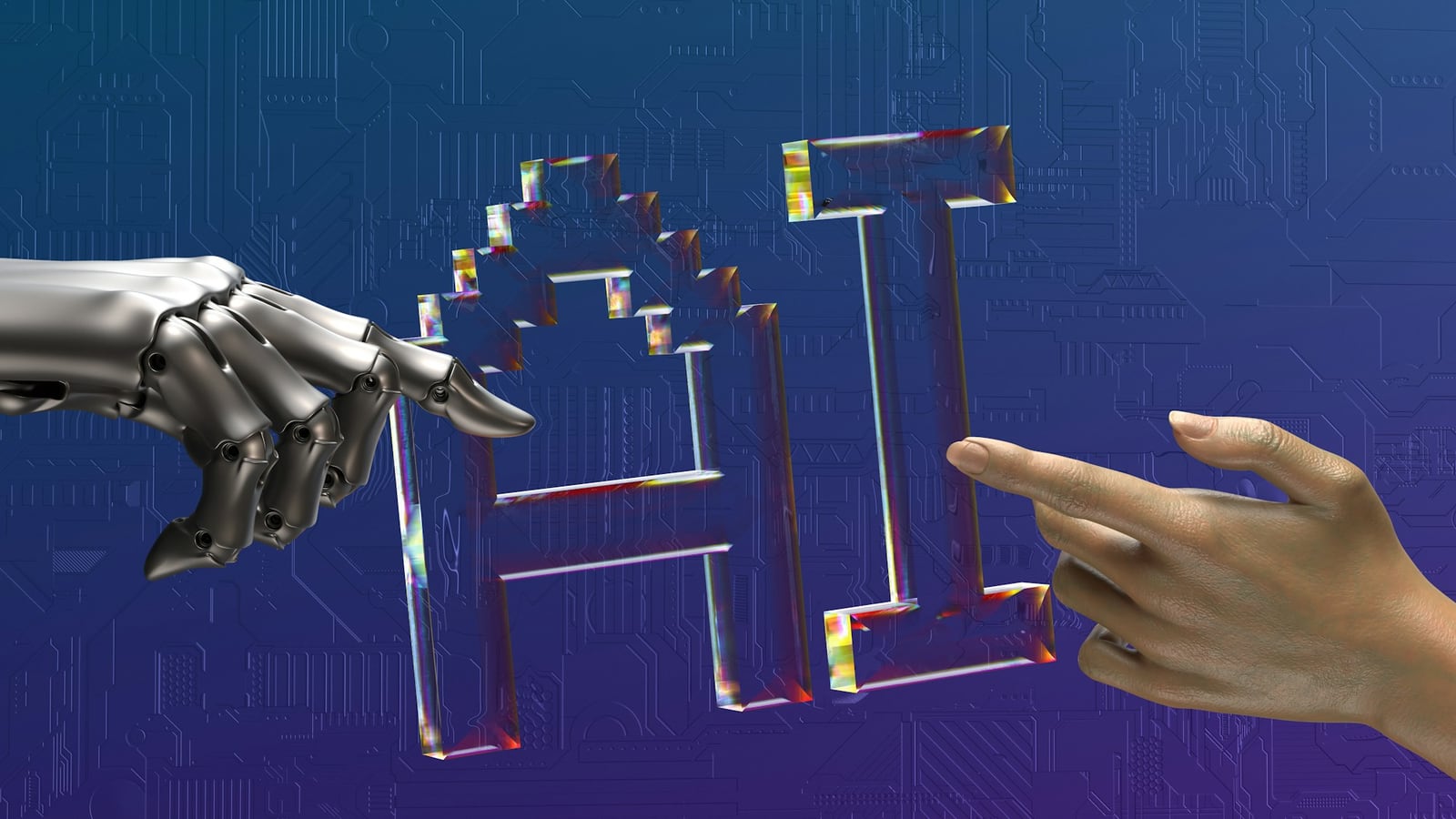
What changes here isn't the automation of a single task but the structure of the team. Today a software project has a team of five to ten people: an analyst, developers, a tester, a designer. In the near future the same work could be done by a team made up of one human manager and, under them, AI agents that talk to each other. One agent writes the code, another tests it, another prepares the documentation, yet another monitors for bugs.
Human management will always be necessary. Because someone has to set the goal, make the calls on trade-offs and be accountable for the outcome. But the meaning of the word "team" is changing. We're entering a world where one person can do what, until yesterday, took a whole company.
Something similar is happening in manufacturing: design, simulation, planning and quality control are increasingly moving into software. Robots have been in factories for years, of course; AI is making them more flexible. The limiting factor here isn't intelligence, but the cost of the machines and the time it takes to rebuild a factory.
Wave 4: Cinema, acting and entertainment
Making a film used to require cameras, sets, lighting, actors and a crew of hundreds. In 2026 that sentence is no longer true:
- June 2026: The 75-minute, fully AI-generated Dreams of Violets was screened as the first AI feature film accepted into the official programme of Tribeca, a major film festival. According to its makers, the film was made in three months for about $2,000. AI models took the place of cameras, sets and actors.
- August 2026: Higgsfield AI's 110-minute action comedy The Cully Hill Boys was completed, according to its makers, in four weeks on a $2 million budget. AI versions of real people star in the film.
- December 2026: The AI-generated film Gods Don't Give Gifts is gearing up for a theatrical release in the US and an Oscar bid for Best Animated Feature.
Critics still find the look of these films "too glossy" and artificial in places. But a few years ago, AI videos were nothing more than clips a few seconds long, with the image falling apart. In the coming years, productions where one agent writes the script, another plans the scenes, digital actors perform and not a single frame comes from a physical camera will become commonplace.
The first to be affected will be extras, voice actors, visual effects teams and commercial producers. Famous actors will stay protected for a while longer by the "human-made" label and their fan base. Most likely, live theatre and the performing arts will gain value, because there the whole point is that what you're watching is a real human being.
Wave 5: Manual skills and surgery
Electronics repair, electrical and plumbing work, construction trades, surgery.
These professions are the group that feels safest right now, and in the short term they're right. Moravec's paradox applies here in full: doing a task by hand in a messy environment, where it's different every time, is still very hard for robots. Nobody expects a robot to find and replace the wiring inside the wall of an old house any time soon.
But when it comes to surgery, my belief is clear: Once AI and robotic arms come together, in the long run they will operate better than a human surgeon.
The reason is the human. A surgeon is a human too. They get tired, get stressed, get nervous, sweat, and sometimes their hand shakes. They may not have slept well the night before, may have eaten badly or had a drink. They're expected to perform the same whether the operation is at eight in the morning or three at night, but that isn't always possible. These are all human factors that affect the outcome of an operation. None of them apply to AI and a robotic arm: it doesn't tire, doesn't panic, works as precisely in the tenth hour as in the first minute, and learns from the data of thousands of operations.
Let's look at where we are today:
- 2022: Johns Hopkins's STAR robot performed intestinal surgery on a live pig without human help. However, this required the tissue to be marked in advance and a very controlled environment.
- July 2025: The same team's SRT-H system autonomously performed a key phase of gallbladder surgery on pig organs removed from the body, succeeding in eight out of eight trials. The system had learned the operation from videos and could respond to spoken commands.
- 2026: Humanoid robots, teleoperated by surgeons, performed operations in preclinical trials.
So technically the road is opening up, but a fully autonomous operation has not yet been performed on a human patient. According to the FDA, the US agency for drugs and medical devices, today's approved surgical robots cannot operate without direct human control. Even today's famous da Vinci robot is really an instrument controlled by a surgeon; it doesn't make decisions on its own.
Robots have their own kinds of failure too: sensor faults, software bugs, an anatomy never seen in the training data. That's why I think the transition will go like this: first, narrow, standardised steps like suturing will move to the robot. Then entire routine operations. The surgeon, meanwhile, will turn from the person who performs the operation into the person who supervises it and steps in when something unexpected happens. And at some point, when asked "Should a robot or a human do this operation?", patients themselves will start answering "the robot".
The last ones standing: Responsibility, trust and jobs that touch people
So who will be left at the very end? I'd say three groups:
- Those who carry responsibility: Managers, judges, the person accountable for the outcome. When a decision turns out wrong, "the AI said so" is not an answer society will accept.
- Those who touch people: Nursing, elderly and child care, teaching, psychological support. AI could technically do some of this work, but people want to see a human in front of them.
- The "human-made": Craftsmanship, live performance, handiwork. When everything can be produced by machines, the human hand becomes a valuable label.
The overall ranking
| Rank | Profession group | Why this position? | Estimated timing |
|---|---|---|---|
| 1 | Customer service, translation, content writing, data entry, entry-level software | Digital, huge workforce, low cost of error | Already under way |
| 2 | Mathematics and theoretical sciences | Digital and definitively verifiable; AI is catching up with the very best humans | 2026-2030 |
| 3 | Software and engineering teams, finance, legal research, accounting | AI agent teams can be built, a human manager stays | 2027-2032 |
| 4 | Cinema, acting, advertising, voice acting, visual effects | Films are already being made without cameras or sets | 2027-2035 |
| 5 | Jobs requiring manual skills, and surgery | Robotic hardware, safety and regulatory approval slow the transition | 2032-2045 |
| 6 | Management, care, teaching, craftsmanship | Responsibility and human trust | Last, maybe never |
The timing estimates are my personal forecasts, not firm dates.
So what should we do?
This picture may look frightening. But the same thing happens in every wave: the person who does the work is replaced by the person who manages it, checks it and takes responsibility for it. So the safest strategy isn't to run away from AI, but to be the person who uses it best.
The way to protect a profession from AI is to be the person within that profession who can manage AI agents. Today, the question for a mathematician, a software developer or a surgeon isn't "Can AI do my job?" The real question is: "When AI is doing my job, what will I be doing?"
Sources
- TechCrunch: OpenAI claims it solved an 80-year-old math problem (20 May 2026)
- OpenAI: An OpenAI model has disproved a central conjecture in discrete geometry
- Quanta Magazine: Why the Legendary Erdős Problems Are Falling to AI (August 2026)
- Starts With A Bang: AI makes its first meaningful breakthrough in theoretical physics (October 2026)
- ScienceDaily: AI just discovered new physics in the fourth state of matter (April 2026)
- Stanford Digital Economy Lab: Canaries in the Coal Mine, August 2026 update
- International AI Safety Report 2026
- Johns Hopkins: Robot performs first realistic surgery without human help (July 2025)
- Johns Hopkins: STAR robot performs intestinal surgery (January 2022)
- UC San Diego: Surgeons use teleoperated humanoid robots to perform live surgery
- Variety: Tribeca accepts fully AI-generated film "Dreams of Violets"
- Semafor: AI startup produces fully AI-generated feature-length film (August 2026)
- Variety: AI film "Gods Don't Give Gifts" sets December theatrical run
Muhammed Emin Özdemir
Senior full-stack developer at VakıfBank. Focused on enterprise systems, clean code and LLM-based tools.
More about me →
Comments
Be the first to comment